If you are running a business, whether small or large, you must have come across the terms “Invoice” and “Quotation.” While they may seem similar, they serve very different purposes in business transactions. Understanding the difference is crucial to maintain professionalism, avoid payment delays, and improve client relationships. In this blog, we will explore the key differences between invoices and quotations, why they are important, and how using tools like MyBillZone can streamline your business operations.
What is a Quotation?
A quotation is essentially an offer or proposal provided to a client. It contains details about the products or services you offer, their prices, and the terms of sale. In simple words, a quotation tells your client, “Here’s what we can provide and how much it will cost.”
Key Features of a Quotation:
- Issued Before Sale: Quotations are provided before any transaction takes place.
- Price Estimate: It lists the price of the product or service, quantity, and sometimes discounts.
- Terms and Conditions: Delivery timelines, payment terms, and other important conditions are mentioned.
- Not Legally Binding: A quotation is a proposal. The client can accept, negotiate, or reject it.
- Professional Representation: A well-prepared quotation builds trust and professionalism.
Example: Suppose you run a catering business. A client requests a menu for a wedding party. You provide a quotation mentioning food items, quantity, cost per plate, total cost, and delivery date. The client reviews it and decides whether to approve it or negotiate further.
What is an Invoice?
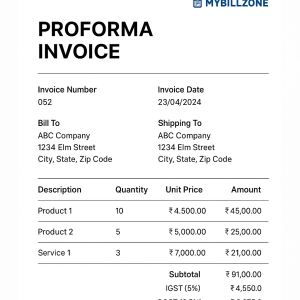
An invoice is an official request for payment that you issue after delivering a product or service. Unlike a quotation, an invoice is a formal, legally recognized document that confirms the transaction has taken place.
Key Features of an Invoice:
- Issued After Sale: Invoices are generated once the product is delivered or the service is rendered.
- Legally Binding: Clients are obligated to pay the amount mentioned in the invoice.
- Payment Details: Includes total cost, taxes, payment terms, due date, and sometimes late fees.
- Transaction Proof: Serves as proof of business transactions for both the seller and client.
- Professional Documentation: Helps maintain organized records for accounting and taxation purposes.
Example: Continuing with the catering example, once the wedding party is served, you issue an invoice stating the total amount payable, taxes, and payment due date. The client then makes the payment as per the invoice.
Key Differences Between Invoice and Quotation
| Feature | Quotation | Invoice |
|---|---|---|
| Purpose | To provide a price estimate before sale | To request payment after delivery |
| Timing | Before transaction | After transaction |
| Legally Binding | No | Yes |
| Details Included | Product/service description, price, terms | Product/service description, price, taxes, total amount, payment terms |
| Client Action | Can accept, negotiate, or reject | Must pay by due date |
| Professional Use | To attract clients and provide clarity | To ensure smooth payment and accounting |
By understanding this table, businesses can avoid confusion and ensure that clients clearly know when they are getting a proposal versus a bill.
Why Quotations Are Important
Quotations are not just formalities—they play a critical role in business success. Here’s why:
- Sets Client Expectations: Quotations clearly define prices, terms, and deliverables, reducing misunderstandings.
- Builds Trust: A well-prepared quotation demonstrates professionalism.
- Negotiation Tool: Allows clients to negotiate prices or quantities before finalizing the deal.
- Sales Strategy: Acts as the first step in converting a lead into a customer.
- Record Keeping: Helps businesses maintain a record of offers made to clients.
Without quotations, clients may be unclear about costs, leading to disputes or loss of business.
Why Invoices Are Crucial
Invoices are equally important because they formalize the payment process. Here’s why businesses cannot ignore them:
- Ensures Payment: An invoice acts as a legal document that clients must honor.
- Accounting and Taxes: Invoices help track sales, calculate taxes, and maintain organized financial records.
- Professionalism: Timely and clear invoicing projects a professional image.
- Avoids Confusion: Clearly mentions payment terms, due dates, and taxes to prevent disputes.
- Supports Business Growth: Accurate invoicing helps in forecasting cash flow and planning future business strategies.
Using MyBillZone for Quotations and Invoices
Manually creating quotations and invoices can be time-consuming, prone to errors, and difficult to track. This is where MyBillZone comes in.
Features of MyBillZone:
- Quotation Templates: Create professional quotations quickly and send them to clients.
- Invoice Automation: Generate invoices instantly after delivery.
- Tax and GST Calculations: Automatically calculates taxes to ensure compliance.
- Client Management: Keep track of which quotations are accepted and which invoices are pending.
- Reports & Analytics: Analyze sales, pending payments, and business growth easily.
Using MyBillZone simplifies the entire process, saving time and reducing errors, making your business more efficient and professional.
Tips for Using Quotations and Invoices Effectively
- Always Send Quotation First: Never deliver products or services without a clear quotation.
- Use Professional Templates: Maintain consistent branding and professional appearance.
- Clearly Mention Terms: Include payment terms, delivery timelines, and taxes in both quotations and invoices.
- Follow Up on Pending Invoices: Timely reminders help ensure faster payments.
- Keep Records: Digital records help during audits, tax filing, and business analysis.
Conclusion
Both quotations and invoices are essential documents in business, but they serve different purposes. A quotation sets client expectations and attracts business, while an invoice ensures payment and maintains financial records.
With tools like MyBillZone, businesses can streamline the process, maintain professionalism, and focus more on growth rather than paperwork. By understanding the difference between a quotation and an invoice, you can prevent confusion, improve client relationships, and ensure smooth financial operations.